FIFA knows it's virtually impossible to boycott a World Cup, unless you're a housewife who goes to one of those World Cup matinée showings at the local cinema. Despite a barrage of criticism of FIFA's shady goings on, Gary Lineker most recently getting in on the act, FIFA, rather like Vladimir Putin, look set to carry on regardless.
There were already many large clouds gathering over FIFA before this summer. As John Oliver's first class putdown of FIFA on the eve of this year's tournament basically said, if you're a football fan it's in a way better not to know. Brazil 2014 was, on the pitch, a resounding success, with some compelling games. Off it, the picture didn't look so clever. Many Brazilians had put the boot in on the project long before their team's infamous 7-1 defeat.
The FIFA bribery scandal is covered elsewhere by those that know far more about it than me, but suffice it to say that, if Qatar is guilty of giving bribes to get the 2022 World Cup, and not forgetting that Russia was awarded the 2018 World Cup at the exact same FIFA Congress in 2010, some further dots may need to be joined up there. Franz Beckenbauer's suspension for not complying with FIFA's internal investigation has something of the air of a Putin-style scapegoating of some low-ranking official.
The Qatar decision has brought with it all manner of strife. At present FIFA appears to be procrastinating over whether to upset Europe's clubs and associations and their calendars by holding a winter World Cup, or whether to chance the fate of millionaire footballers in the summer desert temperatures, which seems increasingly unlikely. Again, many are doing a far better job than me highlighting the dreadful human rights situation in the country and the horrendous working conditions of the migrant workers who are building the facilities.
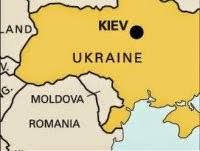
There was already a lobby against the holding of the 2018 World Cup in Russia which had been exponentially growing with Russia's annexation of Crimea and its instigation of terrorism and armed insurgency in Eastern Ukraine, added to the remnants of the anti-Sochi campaign appalled by Russia's gay rights situation. Then, with the shooting down of MH17, citizens and families of nationals from Holland, Australia, Malaysia and the UK were suddenly thrust into the world Ukrainians have been living in since November last year, and Chechens very much longer. All of a sudden politicians from those countries were talking tough about taking the World Cup away from Russia. Who's to say if they will keep it up?
Russia 2018 also faces practical problems. Visiting teams basing themselves in Crimea looks a non-starter as non-recognition policy is already beginning to restrict the ability of airlines to fly there. Russia itself is already starting to turn the screw on World Cup sponsor McDonald's (even Coca Cola is not safe, not to mention iPhones and iPads). Russia is busy banning products and this is likely to push up prices. Airlines may not be able to fly over Siberia to get to the tournament. After Euromaidan, political change in Russia is also not out of the question. Somebody somewhere in FIFA must be a bit jittery about all this, but publicly there seems little concern.
Many believe that there is about as much chance of FIFA moving the 2018 or 2022 World Cups as there is of Formula 1 missing out Bahrain or Sochi from its race calendar. At least F1 chief Bernie Ecclestone is blunt, if morally bankrupt, on human rights issues affecting host countries, whilst FIFA loftily proclaims that the World Cup can 'bring positive change'. If that's the kind of 'positive change' the Sochi Winter Olympics brought, then sorry, we don't want it.
So, think about this, in particular if you are, for example, the English FA. You have already been deprived of hosting a World Cup in what was quite possibly a corrupt voting process, and your leagues and clubs are not happy at all about the impending 2022 winter World Cup. FIFA has taken hold of world football when in fact it is the national leagues and the Champions' League which are the sport's bread and butter. Couldn't the various associations quite easily get together and pledge to run a rival competition for 2018 & 2022?
I would personally be more than happy to see Europe's great sides (Germany, Holland etc.) take a decision for the greater good of football and humanity, and simply decide not to send their teams to either of these World Cups (I'd also like to see the USA, Australia and England do the same, but if it was only those 3 most would assume they just hadn't qualified). The English FA seem more worried about demolishing the English lower leagues with Premier League B teams than whether or not the World Cup will be played in climatic or political conditions safe for their players. As with all things it seems, Germany is the key. If the defending champions didn't show up, what sort of World Cup would that be? Kazakhstan v Vietnam anyone?
Doubting even that as the force to topple FIFA's falkekirche, what about the law? Is there a legal basis to at least get Russia stripped of the 2018 World Cup and hope the corruption issues are exposed in time to spare us a World Cup under the blankets in 2022? The answer may lie in Crimea.
Crimea: What happened to FIFA and UEFA's own rules?
Whilst not the most illustrious footballing outpost, the Russian-occupied Ukrainian peninsula of Crimea is another moral test case for both FIFA and European football governing body UEFA. That's because, a few years ago both organisations made some rules, which they enforced too.
As recently as 2010, France was threatened over what FIFA calls political interference in football. Some countries, such as Brunei and Kenya, have even had their football associations and national teams suspended over it. Presumably hosting a World Cup under such circumstances would be out of the question. Early reports after Crimea annexation, regarding Tavriya Simferopol in particular, suggested that, until the UN rules that Crimea is part of Russia, the clubs would prefer to stay in the Ukrainian league. However, one of the earliest voices, back in late March when the dust was still settling, to claim that Crimean teams would be playing in the Russian league was Russia's Sports Minister, Vitaly Mukto (FIFA later claimed they had given no such consent). A FIFA letter as recently as early June seemed to confirm what we all know-Crimean football is Ukrainian football. The clubs were affiliated to the Ukrainian FA, so their fate was none of Russia's business.
The solution has in fact been to unceremoniously kill off two football clubs, Tavriya Simferopol and FK Sevastopol, and place three new entities into the Russian 2nd division, created under 'Russian law'. What 'Russian law' means in a territory not internationally recognised as Russia is an open question. As Russia is not a democracy, we will probably never know precisely what forces were brought to bear, but it looks as if political interference, which has pervaded every aspect of life in Crimea since March, looks highly likely.
For some, the issue has been kicked into the long grass by the fact that whilst Tavriya played in European competition as recently as 2010, the peninsula's fans are now unlikely to see European football there for the foreseeable future, but this is not just about which country the team represents in European competition. If the move is allowed to stand, what will be the fallout for football in general?
That's where UEFA comes in. When Evian were promoted to the French top division, and lacking the facilities to match, they more than once sought to play home games just across the border at the much flashier Stade de Genève in Geneva, a request which UEFA denied in 2013 on the following very clear basis:
"Though sympathetic to the predicament of the club, Platini pointed out UEFA regulations do not allow clubs to play their games in national competitions outside the confines of their country's borders."So that seems very clear. Even if one is sympathetic to Russia's wishes (and, by the way, none of us are), rules are rules. Crimea is not internationally recognised as part of Russia and UEFA is an international organisation.
Of course there are exceptions that every football anorak knows. Teams from Lichtenstein and San Marino play in neighbours' national leagues, Berwick Rangers are based in England but play in the Scottish league, and most notably, Swansea City play in the English Premier League with a handful of clubs scattered further down the English football pyramid. However, that's no justification for the Russian league's move. First of all, such a move was never made unilaterally by a single association. In fact, what was once perhaps unfairly dubbed the Comical League of Wales (Konica the unfortunate inaugural sponsor) came into being over strained relations over the very issues of where teams from a particular country play, and the possible knock-on threat to Wales's national side. All but four of the Welsh clubs in the English league were ordered to join the Welsh league, and many played in exile in England as the dispute rumbled on.
In the end it was recognised that Cardiff, Swansea and Wrexham would be cutting their own throats giving up playing in the English league to play in basically a semi-professional league, rather like Tavriya and Sevastopol will be doing playing 'Torpedo Armavir' and 'Mashuk-KMV' instead of Dynamo Kiev and Shakhtar Donetsk, not to mention the 12 hour wait for the ferry from Kerch. I bet their fans are really excited. Many fans, most notably Tavriya's ultras (who were loyal backers of the Euromaidan protests) have no desire to watch Russian lower league football.
Alas there's not much optimism that UEFA will take a principled stance on Crimea either, particularly being that the Russian government's energy arm Gazprom sponsors its flagship Champions' League. And there we all were wondering why Gazprom would bother sponsoring the Champions' League. Isn't that clever? Match ticket €40. Replica shirt €60. Cutting off Ukraine's gas in winter? Priceless.
Will the Ukrainian FA challenge it? They should. Gibraltar took their case for FIFA/UEFA membership to the Court of Arbitration for Sport where they finally got justice. Kosovo are still battling for full FIFA membership. These things take time. They are not simply decided unilaterally by a single national football association under political coercion.