Showing posts with label Crimea. Show all posts

Wednesday, August 06, 2014

Crimea adds to reasons for nations to skip 2018 & 2022 World Cups

With FIFA credibility at rock bottom, Russia and Qatar both morally untenable, and that winter World Cup, should our nations even go to 2018 & 2022? And what's Crimea got to do with it?

FIFA knows it's virtually impossible to boycott a World Cup, unless you're a housewife who goes to one of those World Cup matinée showings at the local cinema. Despite a barrage of criticism of FIFA's shady goings on, Gary Lineker most recently getting in on the act, FIFA, rather like Vladimir Putin, look set to carry on regardless.

There were already many large clouds gathering over FIFA before this summer. As John Oliver's first class putdown of FIFA on the eve of this year's tournament basically said, if you're a football fan it's in a way better not to know. Brazil 2014 was, on the pitch, a resounding success, with some compelling games. Off it, the picture didn't look so clever. Many Brazilians had put the boot in on the project long before their team's infamous 7-1 defeat.

The FIFA bribery scandal is covered elsewhere by those that know far more about it than me, but suffice it to say that, if Qatar is guilty of giving bribes to get the 2022 World Cup, and not forgetting that Russia was awarded the 2018 World Cup at the exact same FIFA Congress in 2010, some further dots may need to be joined up there. Franz Beckenbauer's suspension for not complying with FIFA's internal investigation has something of the air of a Putin-style scapegoating of some low-ranking official.  

The Qatar decision has brought with it all manner of strife. At present FIFA appears to be procrastinating over whether to upset Europe's clubs and associations and their calendars by holding a winter World Cup, or whether to chance the fate of millionaire footballers in the summer desert temperatures, which seems increasingly unlikely. Again, many are doing a far better job than me highlighting the dreadful human rights situation in the country and the horrendous working conditions of the migrant workers who are building the facilities.

There was already a lobby against the holding of the 2018 World Cup in Russia which had been exponentially growing with Russia's annexation of Crimea and its instigation of terrorism and armed insurgency in Eastern Ukraine, added to the remnants of the anti-Sochi campaign appalled by Russia's gay rights situation. Then, with the shooting down of MH17, citizens and families of nationals from Holland, Australia, Malaysia and the UK were suddenly thrust into the world Ukrainians have been living in since November last year, and Chechens very much longer. All of a sudden politicians from those countries were talking tough about taking the World Cup away from Russia. Who's to say if they will keep it up?

Russia 2018 also faces practical problems. Visiting teams basing themselves in Crimea looks a non-starter as non-recognition policy is already beginning to restrict the ability of airlines to fly there. Russia itself is already starting to turn the screw on World Cup sponsor McDonald's (even Coca Cola is not safe, not to mention iPhones and iPads). Russia is busy banning products and this is likely to push up prices. Airlines may not be able to fly over Siberia to get to the tournament. After Euromaidan, political change in Russia is also not out of the question. Somebody somewhere in FIFA must be a bit jittery about all this, but publicly there seems little concern.

Many believe that there is about as much chance of FIFA moving the 2018 or 2022 World Cups as there is of Formula 1 missing out Bahrain or Sochi from its race calendar. At least F1 chief Bernie Ecclestone is blunt, if morally bankrupt, on human rights issues affecting host countries, whilst FIFA loftily proclaims that the World Cup can 'bring positive change'. If that's the kind of 'positive change' the Sochi Winter Olympics brought, then sorry, we don't want it.

So, think about this, in particular if you are, for example, the English FA. You have already been deprived of hosting a World Cup in what was quite possibly a corrupt voting process, and your leagues and clubs are not happy at all about the impending 2022 winter World Cup. FIFA has taken hold of world football when in fact it is the national leagues and the Champions' League which are the sport's bread and butter. Couldn't the various associations quite easily get together and pledge to run a rival competition for 2018 & 2022?

I would personally be more than happy to see Europe's great sides (Germany, Holland etc.) take a decision for the greater good of football and humanity, and simply decide not to send their teams to either of these World Cups (I'd also like to see the USA, Australia and England do the same, but if it was only those 3 most would assume they just hadn't qualified). The English FA seem more worried about demolishing the English lower leagues with Premier League B teams than whether or not the World Cup will be played in climatic or political conditions safe for their players. As with all things it seems, Germany is the key. If the defending champions didn't show up, what sort of World Cup would that be? Kazakhstan v Vietnam anyone?

Doubting even that as the force to topple FIFA's falkekirche, what about the law? Is there a legal basis to at least get Russia stripped of the 2018 World Cup and hope the corruption issues are exposed in time to spare us a World Cup under the blankets in 2022? The answer may lie in Crimea.


Crimea: What happened to FIFA and UEFA's own rules?

Whilst not the most illustrious footballing outpost, the Russian-occupied Ukrainian peninsula of Crimea is another moral test case for both FIFA and European football governing body UEFA. That's because, a few years ago both organisations made some rules, which they enforced too.

As recently as 2010, France was threatened over what FIFA calls political interference in football. Some countries, such as Brunei and Kenya, have even had their football associations and national teams suspended over it. Presumably hosting a World Cup under such circumstances would be out of the question. Early reports after Crimea annexation, regarding Tavriya Simferopol in particular, suggested that, until the UN rules that Crimea is part of Russia, the clubs would prefer to stay in the Ukrainian league. However, one of the earliest voices, back in late March when the dust was still settling, to claim that Crimean teams would be playing in the Russian league was Russia's Sports Minister, Vitaly Mukto (FIFA later claimed they had given no such consent). A FIFA letter as recently as early June seemed to confirm what we all know-Crimean football is Ukrainian football. The clubs were affiliated to the Ukrainian FA, so their fate was none of Russia's business.

The solution has in fact been to unceremoniously kill off two football clubs, Tavriya Simferopol and FK Sevastopol, and place three new entities into the Russian 2nd division, created under 'Russian law'. What 'Russian law' means in a territory not internationally recognised as Russia is an open question. As Russia is not a democracy, we will probably never know precisely what forces were brought to bear, but it looks as if political interference, which has pervaded every aspect of life in Crimea since March, looks highly likely.

For some, the issue has been kicked into the long grass by the fact that whilst Tavriya played in European competition as recently as 2010, the peninsula's fans are now unlikely to see European football there for the foreseeable future, but this is not just about which country the team represents in European competition. If the move is allowed to stand, what will be the fallout for football in general?

That's where UEFA comes in. When Evian were promoted to the French top division, and lacking the facilities to match, they more than once sought to play home games just across the border at the much flashier Stade de Genève in Geneva, a request which UEFA denied in 2013 on the following very clear basis:
"Though sympathetic to the predicament of the club, Platini pointed out UEFA regulations do not allow clubs to play their games in national competitions outside the confines of their country's borders."
So that seems very clear. Even if one is sympathetic to Russia's wishes (and, by the way, none of us are), rules are rules. Crimea is not internationally recognised as part of Russia and UEFA is an international organisation.

Of course there are exceptions that every football anorak knows. Teams from Lichtenstein and San Marino play in neighbours' national leagues, Berwick Rangers are based in England but play in the Scottish league, and most notably, Swansea City play in the English Premier League with a handful of clubs scattered further down the English football pyramid. However, that's no justification for the Russian league's move. First of all, such a move was never made unilaterally by a single association. In fact, what was once perhaps unfairly dubbed the Comical League of Wales (Konica the unfortunate inaugural sponsor) came into being over strained relations over the very issues of where teams from a particular country play, and the possible knock-on threat to Wales's national side. All but four of the Welsh clubs in the English league were ordered to join the Welsh league, and many played in exile in England as the dispute rumbled on. 

In the end it was recognised that Cardiff, Swansea and Wrexham would be cutting their own throats giving up playing in the English league to play in basically a semi-professional league, rather like Tavriya and Sevastopol will be doing playing 'Torpedo Armavir' and 'Mashuk-KMV' instead of Dynamo Kiev and Shakhtar Donetsk, not to mention the 12 hour wait for the ferry from Kerch. I bet their fans are really excited. Many fans, most notably Tavriya's ultras (who were loyal backers of the Euromaidan protests) have no desire to watch Russian lower league football.

Alas there's not much optimism that UEFA will take a principled stance on Crimea either, particularly being that the Russian government's energy arm Gazprom sponsors its flagship Champions' League. And there we all were wondering why Gazprom would bother sponsoring the Champions' League. Isn't that clever? Match ticket €40. Replica shirt €60. Cutting off Ukraine's gas in winter? Priceless.

Will the Ukrainian FA challenge it? They should. Gibraltar took their case for FIFA/UEFA membership to the Court of Arbitration for Sport where they finally got justice. Kosovo are still battling for full FIFA membership. These things take time. They are not simply decided unilaterally by a single national football association under political coercion.


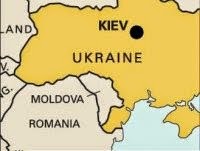
Wednesday, March 19, 2014

Europe's New Northern Cyprus?

Non-recognition of Crimea's status as part of Russia must be more than just words

If it looks like a duck and quacks like a duck, it's a duck. Western leaders have all been quick to proclaim non-recognition of Russia's annexation of Crimea. Yet just days after what could only very charitably be called a referendum on Crimea joining Russia (including a creditable 123% vote in favour in Simferopol and minus any option to remain in the country it has existed in for the past two decades) it seems the world is grudgingly accepting the inevitable, having offered only meagre sanctions, and apparently relieved that Russia appears to have settled for 'only Crimea'. If they're not careful their 'no business as usual' mantra will soon sound as tired and hollow as their 'red lines'.

In truth, Russia would probably have annexed it or set up a breakaway state there along with Transnistria, South Ossetia and Abkhazia in the early '90s had it not massively underestimated Ukraine's divergent political direction from that of Russia. It's difficult to see whether this will fulfil Putin's aim of bringing Ukraine as a whole 'back into the fold'; the two countries now have different sides of a historical grievance to rally around.


In the here and now, clearly the most immediate pressing concern is Ukraine's isolated military units in the peninsula. Whilst both their fortitude and restraint are commendable, there is no international military backing for them whatsoever, and if more of their lives are to be spared, it seems inevitable they will have to withdraw.

Then we must consider the issue of status. There is little prospect of a treaty or formal agreement here. Making any such agreement with Russia would be a catch 22, as making any new agreement would involve formally tearing up a previous one (the 1994 Budapest Memorandum). In so doing, what possible validity could a new agreement have if it could be torn up so easily? Therefore non-recognition seems the only way forward.

For this non-recognition to make any sense however we need to figure out what non-recognition will mean in practice. Non-recognition is absolutely right, but the problem is that if Crimea is treated as a part of the Russian Federation it basically will be.  So the wherewithal of non-recognition and how it could work needs to be figured out quite quickly. As an example, Northern Cyprus is never shown on basic maps as anything other than part of the Republic of Cyprus, and this has never lapsed in 40 years. There was for a long time even a trade ban on the export of Northern Cyprus products, abolished only in 2003. Here Greece was the force to push this forward. Ukraine will be in a stronger position to push once the DCFTA with the EU is up and running.

As regards measures on the ground, non-recognition might involve cutting transport links. It seems to me that it would be adding insult to injury to allow Russian Railways to continue to operate trains to Crimea, merely 'transiting' Ukraine proper, and this is an obvious means of sanctioning the tourism industry there. There is a case for cutting rail links between Crimea and mainland Ukraine altogether in fact. In the case of Northern Cyprus, only flights from Turkey can fly into the territory. The same blockade might be enacted by the international community here. Alternative connections could be built up via, for example, Odessa.

Energy and water are also key issues. Many have pointed out that, with the ability to cut off the peninsula's water and electricity, Kiev has a potential card to play. If the prospect of a gas cut off rears its head once more, this is obviously an option. There will have to be some restraint however. A closure of the border similar to the closure the Spanish inflicted on Gibraltar for many years would only hurt families on both sides.

There should be vigorous public campaigns against organisations endorsing the change. For example, early rumours that National Geographic is to change its map may be the start of a capitulation that must be resisted through any means available. Disregarding all other arguments, it can simply be pointed out that no major power has recognised the occupation and that the case is yet to go before the International Court of Justice.


Sport is also a factor. UEFA could play a useful role in non-recognition of Crimea's Russian status. Tavriya Simferopol and FK Sevastopol currently play in the Ukrainian Premier League and should continue to do so, and UEFA has the power to make such decisions. In in albeit more innocuous example, France's Evian TG FC were refused permission to play home games across the Swiss border in Geneva as it was in another state. On this basis UEFA should refuse to allow any teams from Crimea to participate in the Russian league structure, and threaten trouble if they do, with Russia's participation in the 2014 and hosting of the 2018 tournament potentially at risk. FIFA has always taken a hard line on political interference in the running of football (at least with African countries) so it should be difficult for Russia to force UEFA's or FIFA's hand. 

Finally, there is the question of the endgame. Even the most optimistic would be hard pressed to think that Crimea will ever truly return to Ukrainian rule. Whilst before the Russian intervention it seems there wasn't a majority in favour of Russian rule, it will be equally difficult several years down the line to expect a majority to be in favour of Ukrainian rule. But it is reasonable to hope for a more legitimate settlement in Crimea in future. Little will be possible without democracy, and with Putin's situation apparently strengthened, there is little hope for the time being, but this illustrates the need for non-recognition to be maintained, for decades if need be, as with Northern Cyprus.

What Crimeans need to realise is that the dismantling of the Ukrainian letters on the front of the Verkhovna Rada of Crimea represents, in effect, the dismantling of autonomy. The Russian Federation is a federation in name only, and Putin has progressively abolished autonomy across the country during his rule. A once ambitious plan for Kaliningrad, for example, to be a 'Baltic Republic' using both the rouble and the Euro and forming a gateway to the EU was, with Putin's accession to power, promptly shelved. Look at Kaliningrad now-a neglected backwater from which Russians flock across the border to shop at cheaper Polish supermarkets. Crimea is also, for now, doomed to become such a backwater, and they will see that last week's fake foray into democracy bears little relation to the future, where elections will offer no genuine choice and factual information, from a media which has moved from bias to full on North Korea style propaganda, will be scarce.

In a post-Putin scenario however, the issue will almost certainly be revisited. It could be argued that, in a democratised Russia, if given true autonomy, with full language rights for minorities, there would be little reason to complain about Russian rule. If Tatar, for example, appeared on bilingual street signs alongside Russian, few could complain. Another proposal might be independence, and a parallel might be drawn with Slovakia, where a 10% Hungarian minority, despite many tensions, ensures that the rights of minorities are addressed. An independent Crimea would have a 15% Tatar minority and a significant Ukrainian population, so in a democratic scenario, the communities would each have to be taken seriously. If by then however the non-recognition policy has lapsed, that opportunity will be lost.

Remember that after three decades of occupation, the Turkish population of Northern Cyprus in 2004 actually voted in favour of reunion with the south. Many of them have taken Republic of Cyprus citizenship (not surprisingly as this is also EU citizenship). Ukraine should consider changing the law to allow dual citizenship for all those in Crimea who wish to remain Ukrainian (it would also be in the wider interests of a country which has consistently lost citizens since 1991). A lot depends on the capacity of Ukrainians to build a successful country that will weaken the will of Crimeans to keep it in Putin's prison. If the EU follows through and grants visa free travel to Ukrainians, as it will do for Moldovans this May, the idea of having a 'Russkiy pasport' already begins to lose its appeal. For Crimea, it might be the beginning of a long road back.

Monday, March 03, 2014

How to hurt Putin

Sign the Association Agreement

The best thing the EU could do is get Acting President Turchynov on a plane to Brussels as soon as possible and sign the Association Agreement. The EU has shown itself over the past 3 months to be an utterly incompetent foreign policy actor. The extra powers won at Lisbon look ill-deserved, the posts of Foreign Policy Representative and EU President worthy of abolition at the next treaty change. However, the EU still has a massive tool at its disposal. The whole point of the Kremlin’s crusade all along has been to prevent the signing of the AA and to ensure Ukraine was on the path to the Eurasian Union, so signing the agreement would be a blow to Putin in no uncertain terms. It might even stabilise the situation across Ukraine and give opponents of the occupiers in Crimea a concrete reason to hang on to their Ukrainian passports. The Kremlin delights in knowing the west will never act so quickly and decisively. Oh that we could.

Close the Bosphorous to Russian shipping

Turkey has a role to play here, and a right to do so on a number of counts. Firstly, the Crimean Tatars, whose future inside a Russia with an awful minority rights record looks potentially appalling, are the Turks’ ethnic kin (as place names such as Kazantip or Bağçasaray bear clear testament to), so arguably Turkey has a moral obligation here, and the Crimean Tatar diaspora in Turkey itself would support this. Turkey's media is already claiming, rather in the way that Spain does with Gibraltar, that if Crimea breaks away, it should legally revert to Turkish rule. Although that's practically impossible, it does help to legtimise Turkish involvement. Secondly, Putin’s support for Assad has had direct consequences for Turkey, bringing with it massive refugee problems. Thirdly, Russia’s asserting itself on the Black Sea has major implications for the Black Sea security situation. Turkey should close off the Bosphorous to Russian shipping and insist on a place at the table if there is mediation. Or at the very least, Russian ships passing through the straits (there have been two in recent days) ought to be 'escorted' by their Turkish counterparts. One of two warships dispatched to the fringe of the region would also concentrate minds in Moscow. Erdoğan would probably appreciate a distraction from domestic issues, including a corruption probe. They might not have a spotless record themselves on human rights, but at the moment Ukraine should take all the help it can get.


Sanctions

An obvious one, but it took a very long time indeed and many deaths before it really looked like becoming a reality for the orchestrators of the violent crackdown in Kiev. It has been claimed however, by Mikhail Saakashvili for example, that it was the crystalising of the threat of sanctions that finally lead to the collapse of Yanukovych's house of cards. Sanctions against Russian officials might also try the patience of many of Putin's backers. There is also the potential for broader economic sanctions, and with the Russian economy now on the ropes, their impact might be felt quickly.

Monday, January 06, 2014

The Scots, the Catalans, the Ukrainians and the Normans

Russian thinking on Ukraine, and itself, is swimming against the tide

You're in a city where the signs are in one language, although many of the inhabitants speak another, the dominant but related language of a major power. One could be thinking of Catalan in Barcelona, or in fact Ukrainian in Kiev. I once really upset a lady from Western Ukraine by making this comparison. To her, Catalonia is only a region of a country, whereas Ukraine most certainly isn't, so the parallel seemed to her belittling. Some Catalans might well see the connection straight away however, as something approaching a majority there now talk of independence from their dominant 'neighbour'.

Such analogies are never perfect, but that hasn't stopped Russia making them publicly in its pursuit of Ukraine. The Russian Ambassador to France sat them down and patiently explained that Ukraine to Russia is like Normandy is to France-essentially inseparable. This analogy is facile though (and even if accepted, it doesn't begin to explain Russia's similar attitude to Georgia, Armenia or Moldova). I would suggest two more suitable ones, and in fact 2014 looks like being an important year for those nations in the shadow of their bigger relative, and the comparisons show just how far off the pace the Russian view is.

For the record, I personally feel more English than British (St. George's should be a public holiday and Anglo-Saxon history taught in schools), but I also feel European (EU freedom of movement is a good thing all round, including Poles, Romanians and Bulgarians), so I don't know whose agenda I'm serving here as neither UKIP nor the liberals would want me I expect. I'm also suspicious of countries that were artificial constructs-they never seem to last. Take Yugoslavia, Czechoslvakia or the USSR. Maybe even the UK? Unlike many academics, I don't consider the nations of Western and Eastern Europe to be intrinsically different. I'm sure, as I'm not from Russia I don't know much, but correct me if any of the dates are wrong. 

Scotland & Britain

The Act of Union between England and Scotland in 1707 took place just two years before Mazepa's last stand against the Russians at Poltava in 1709, so the England-Scotland and Russia-Ukraine unions have both basically existed for 300 years. As the Russians talk about 'Little Russia', the British establishment (which included Scots too by the way) promoted the idea that England would now be 'South Britain', Scotland 'North Britain' and (perhaps most optimistically) Ireland 'West Britain', although needless to say it didn't stick.

Scotland can claim two native languages. One, Gaelic, is enjoying a notable revival, now as visible on 'Welcome to Scotland' signs as "Croeso i Cymru' is in Wales. The other however, Scots, a close relative to English, is perhaps more pertinent to our loose analogy. Like Ukrainian, it has often been dismissed as a dialect of its dominant neighbour, but linguistic experts consider it a language; It has vocabulary which, in some instances, is more recognisible to, say, Norwegians than English (it also, like Ukrainian, once spread deeper into its neighbour's territory). Scots is somehow less prominent though. Like, say, Swiss German, it is rarely visible in its written form.

It used to be said that only around 25% of Scots favoured full independence, and discussion tended to revolve around North Sea oil revenues. Then came devolution, including tax raising powers, and then a Scottish National Party minority government, culminating in next September's 2014 referendum on independence. Support for breaking away is now put at a third of the population and there is a big difference between being asked a theoretical question and a real question.

Of course there is a strategy, official or otherwise, in London to try to keep the Scottish on board. Slightly echoing the situation with Ukraine, pessimism is the tool of choice here too, that Scotland variously 'wouldn't survive' and 'needs Britain'. One of the failures so far of the 'yes' campaign is to move the debate out of these narrow economic arguments which are basically about short term considerations and often based on assumptions. The debate should surely be about how Scottish people view themselves and their future, and the emotive aspect, that of cultural identity and what Scottish people feel that they are is at least as important as hospital prescriptions.

Nonetheless, you can't fault London in the sense that the issue will be decided by a referendum to the people in Scotland. Once upon a time there was a referendum on Ukrainian independence from the USSR, in fact in 1990, in which each region voted for Ukraine's independence, even the Donbas and Crimea. So if the Scots vote yes in 2014, following Russia's example, a bit of arm twisting in 20 years' time should put to rights any aberration in the Scottish vote. 

Catalonia & Spain

Iberia was overrun by the Moors while Kievan Rus was ransacked by Mongol hordes (the Arab cultural influence on Castillians is as true as the Asian influence on the Russians, but, unlike the Russian 'Eurasians', the Spanish are Europeans, and don't claim to be 'Eurafricans', 'Eurarabs' or any such nonsense). One country to emerge from the reconquista was Catalonia. Its incorporation into Spain (and France) again takes place during the 17th-18th centuries with the Treaty of the Pyrenees in 1659 coming just five years after Bohdan Khmelnytsky gave the Russians the car keys at Pereyeslav in 1654 (rather like Yanukovych has just done). Portugal could conceivably have ended up in exacty the same position (one school of thought is that Catalonia moved first, allowing Portugal to break free).

The comparison to be made between Catalan/Spanish and Ukrainian/Russian seems to me a striking one. Both languages punch below their weight; Ukrainian is Europe's 8th most spoken language while Catalan has more speakers than many of the EU's member states. The Russification of Ukraine in the Russian Empire/USSR and imposition of Castillian by Franco, changing Catalan names and place names to Spanish ones, is a familiar story for Ukrainians and Catalans alike. That strange feeling of seeing one language written on the city's street signs but hearing another more commonly spoken on the streets is common both to Kiev and Barcelona. The temptation to mix with a language that is closely related is also acute; in Ukraine that is the 'surzhik' of Russian and Ukrainian and in Catalonia the tendency to come out with Spanish words in a Catalan way rather than pure Catalan (Ukrainians might think of Prime Minister Azarov here).

In terms of an aim of independence, Catalonia on one level seems to have the furthest to go here. Madrid simply says a referendum on independence is 'illegal' but how long does an argument of that sort sit with the basics of democratic legitimacy? It's interesting to observe Catalonia's politicians appealing to the EU on this issue. As with Ukraine, the EU may not have the will or tools to assist meaningfully there either. Spain fears losing a prosperous province and the re-emergence of the Basque problem, but if Scotland and Catalonia show something that Northern Ireland and the Basque Country don't, it's that democratic means can slowly but surely nudge you closer towards your aims.

Catalans, whatever the situation, are, unlike Ukrainians and Russians, completely free to protest and express their views. Catalonia also continues to enjoy real autonomy. Had such autonomy been given to Ukraine in a hypothetical democratising 1980s USSR, perhaps Russia and Ukraine would have stayed together after all, but it's too late, Russia too autocratic, to hope to achieve this kind of outcome now. 2014 won't yield a referendum there but the zeitgeist may mean Catalonia moving closer in that direction, and it's difficult to ignore the zeitgeist.

France & Normandy?

Just to be charitable, I will entertain the Russian Ambassador's analogy a little longer. Normandy was incorporated into France in 1204 (about half a century after the founding of Moscow). The country of France itself had come into being barely 300 years earlier.

Linguistically, Normandy speaks French, and spoke French even as an independent kingdom. Norman French was even the language of royalty and administration in England for hundreds of years follwing the Norman Conquest. So where is the 19th century Norman equivalent of Taras Shevchenko writing his poems in the Norman language? Where is the national awakening? Most crucially, where is the independence movement? Need I go on?

For a better analogy however, France offers several. Look at Corsica, incorporated in 1768, and still restive. The supposedly irrefutable Russian claim to Crimea goes back to its annexation by Russia around the same time, in 1783. Western Savoy was first conquered by Napoleon in 1792, and finally cemented as a part of France in 1860. A Russian contemporary of Nice might be Sochi, founded by Russian imperial expansion in 1838 (but, unlike Nice, consolidated by the ethnic cleansing of the local Circassian population in the mid 19th century).

France in fact has 8 histrical linguistic minorities (Alsatian, Flemish, Breton, Walloon, Corsican, Catalan, Basque and Occitan) as well as numerous dialects and patois. A really interesting case would be the southern third of France, the Occitan territory. This historically spoke the 'langue d'Oc', a language more akin to Catalan. Had history developed differently, who knows if that would have become France's Ukraine?

The Russian Ambassador might have been on safer ground talking about Kievan Rus and the continuity of 'Rasiya' from 'Rus', but then you'd have to ask why France doesn't claim Franconia in Southern Germany? Best keep it simple I suppose. Imagine France bullying Belgium into accepting a role as its vassal state, installing a Francophone government with scant regard for the rights of Dutch speakers, maybe even a Flemish-hating education minister and you're somewhere closer to the mark. After all, the coal mines and steel mills of the industrial south are where the wealth is, and that's the future, surely? Sounds like the 19th century though, right?